Niger State is still battling a cholera outbreak even after treating and discharging over 327 patients. According to health officials, 27 new patients are now receiving treatment across four local government areas.
Previously, the state government had announced that the outbreak was under control, with only 10 patients remaining under observation. However, new infections have been confirmed in Chanchaga, Shiroro, Munya, and Wushishi LGAs.
Distribution of Cases and Response
Uriah Mahmudu, Deputy State Disease Surveillance Officer working with UNICEF, disclosed the figures while delivering additional cholera response supplies in Minna.
He explained the distribution of the current patients as follows
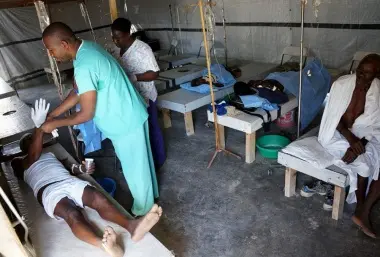
“There are 10 patients at the Cholera Treatment Centre in Kuta, Shiroro LGA, 8 in Wushishi, 7 in Chanchaga, and 2 in Kabula, Munya LGA”
Mahmudu added that the supplies will be used wisely, ensuring patients receive treatment along with hygiene packs. He said communities with confirmed or suspected cases will also get the items to help stop the spread.
UNICEF’s Support and Warnings
Presenting the latest intervention on behalf of UNICEF, Theresa Pamma, a Water, Sanitation, and Hygiene (WASH) Specialist from the Kaduna Field Office, stressed that the intervention is critical as new cases continue to surface.
She expressed concern over the poor sanitation situation in the state
“Niger State has an open defecation rate of 46 percent. This, coupled with the use of unsafe water, is a major driver of cholera outbreaks”
She warned that contaminated water remains the main transmission route
“Cholera happens when human excreta gets into food or drinking water. People are still drinking from unprotected wells and rivers. Water vendors are also selling water from questionable sources”
Pamma emphasized the need for basic sanitation infrastructure
“If every household in Niger State can have a toilet, cholera will not come. All the excreta will go into the toilet, and it won’t contaminate water sources. We call on the government to ensure every household is provided with toilets. If this is done, it will go a long way in reducing the spread of cholera”
She also urged residents to take personal responsibility by prioritising household toilets, hand washing, and water treatment.
Supplies Handed Over
The items handed over to the Niger State Ministry of Health include
– Basic water and sanitation kits
– Drugs and cholera treatment kits
– Water purification tablets
– Community hygiene materials
– 350 cartons of cholera kits
– Glucose drips
– 10 expected drums of chlorine
Earlier donations included
– Cholera and periphery AWD kits
– 40 cholera beds
– Ringers lactate and normal saline
– Antibiotics
– Scrubs and disposable gowns
– Heavy-duty and surgical gloves
– Protective boots
– Chlorine solutions and calcium hypochlorite
– Water and stool testing RDTs
UNICEF’s Health Specialist, Dr. Idris Baba, confirmed that the supplies are sufficient to treat all currently identified and admitted cases across the state.