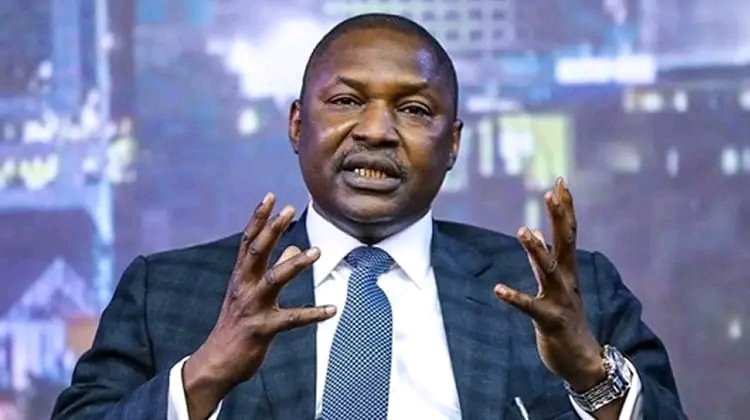
The Economic and Financial Crimes Commission (EFCC) has traced 41 high-value properties estimated at ₦212.9 billion to Abubakar Malami, former Attorney-General of the Federation and Minister of Justice, in one of the most expansive asset-tracking investigations involving a former top government official in recent years.
According to findings obtained by Factshpere, the properties include hotels, residential buildings, schools, factories, lands, a printing press, and commercial facilities, spread across Kebbi State, Kano State, and the Federal Capital Territory (FCT), Abuja.
Breakdown of the Assets
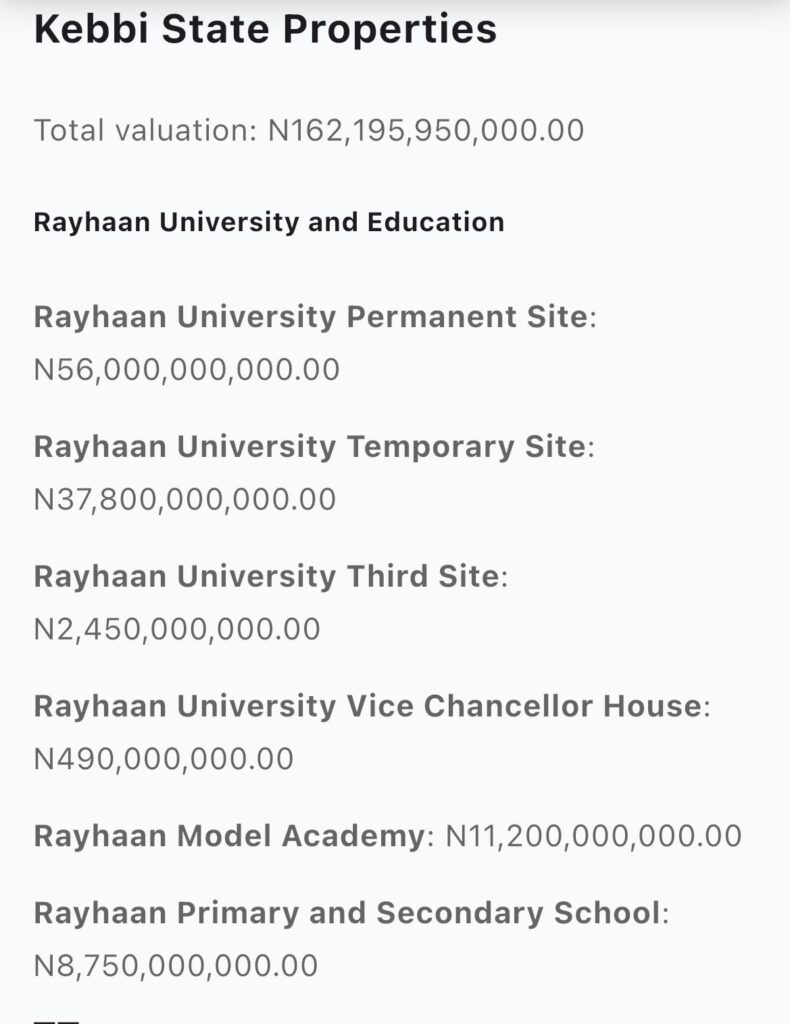
The EFCC’s valuation places the bulk of the assets in Kebbi State, where properties linked to Malami are estimated at ₦162.19 billion. These include educational institutions, industrial facilities, hospitality structures, and multiple residential buildings.
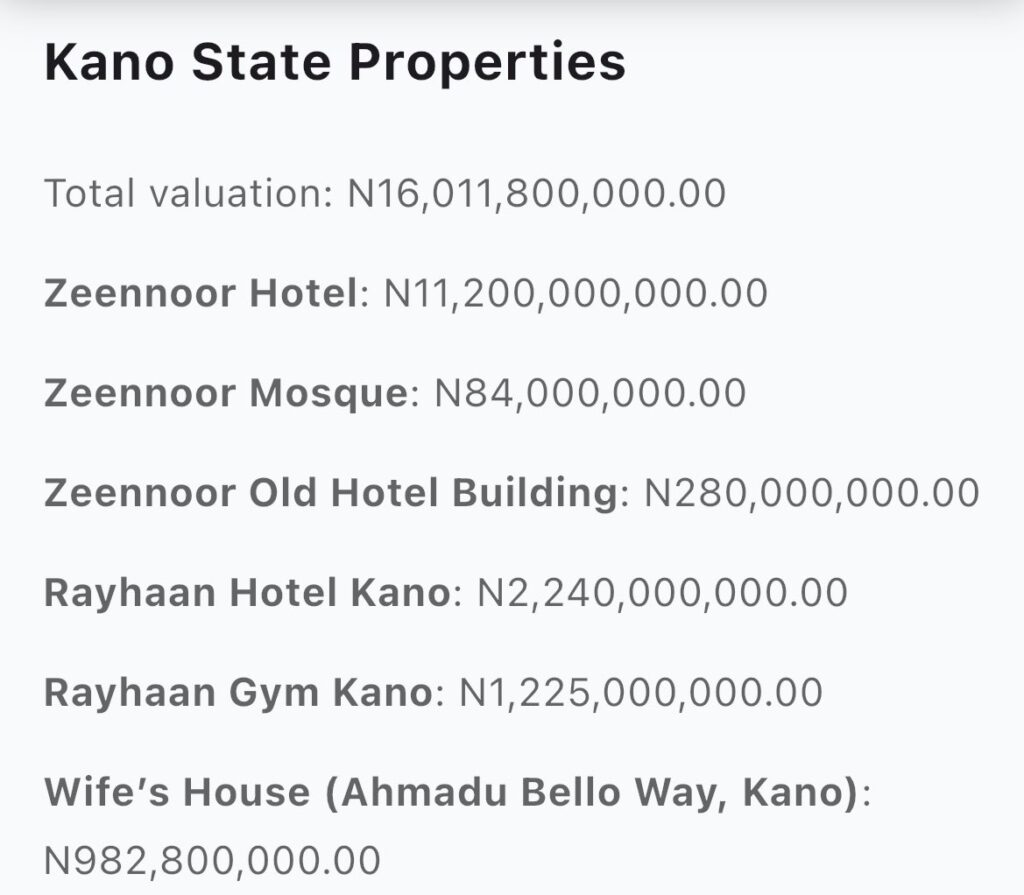
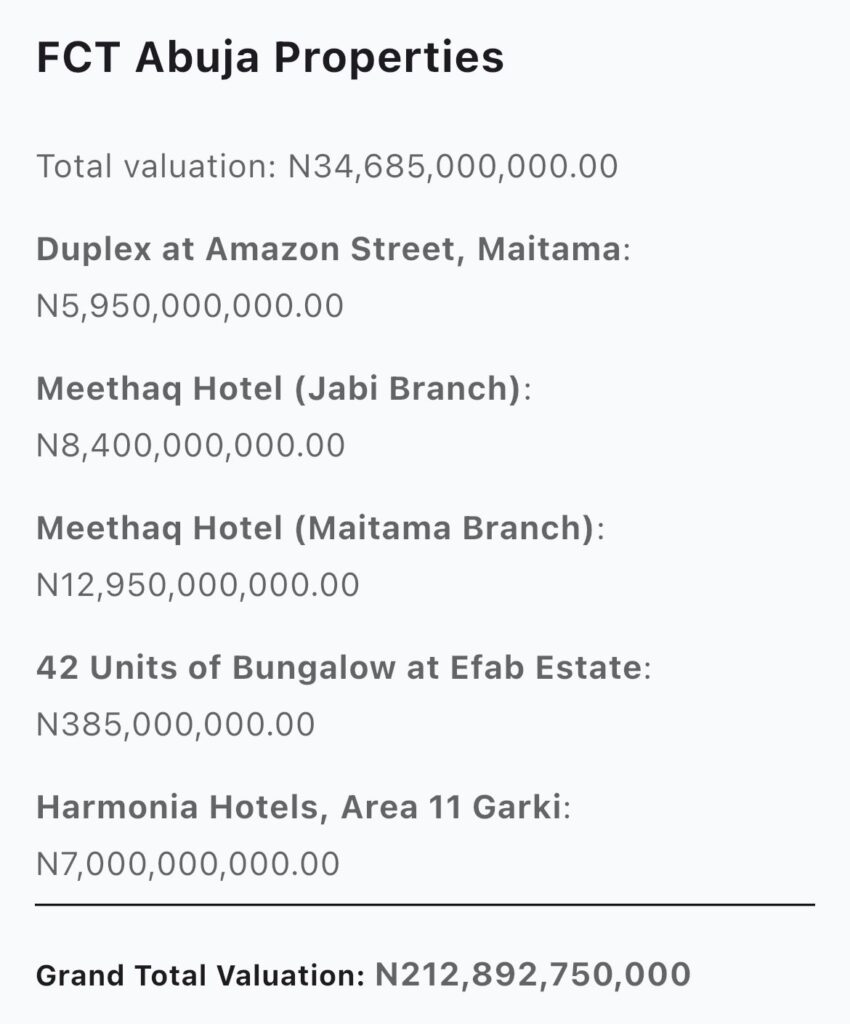
Properties traced to Kano State are valued at ₦16.01 billion, consisting largely of hotels, a mosque, commercial buildings, and private residences. Meanwhile, assets located in the Federal Capital Territory are valued at ₦34.69 billion, with hotels and luxury residential properties forming a significant portion.
Universities, Hotels, and Industrial Facilities
Among the notable properties identified are multiple sites linked to Rayhaan University and Rayhaan educational institutions, including permanent and temporary campuses, staff quarters, and administrative buildings. The EFCC also traced assets connected to hotels operating under different brand names, factories, agro-allied facilities, fuel depots, radio stations, and a printing press.
Investigators say the diversity and scale of the properties raise serious questions about the source of funds used in acquiring and developing the assets, especially considering Malami’s years in public office.
Legal Context and Allegations
The asset tracing forms part of a broader money laundering investigation involving Malami and his son, Abdulaziz Malami. The Federal Government has reportedly filed multiple criminal charges against them under Nigeria’s Money Laundering (Prevention and Prohibition) Act, alleging unexplained wealth and suspicious financial transactions.
While the EFCC has not yet announced asset forfeiture, legal analysts note that tracing assets is often a precursor to seizure proceedings, subject to court rulings and the outcome of ongoing litigation.
Malami Yet to Respond Publicly
As of the time of filing this report, Abubakar Malami has not issued a public response to the EFCC’s findings. The former minister, who served as Nigeria’s chief law officer from 2015 to 2023, has previously denied wrongdoing in past allegations involving his tenure.
Implications for Anti-Corruption Efforts
The development has intensified public debate over asset declaration, accountability, and corruption within Nigeria’s political elite. Analysts describe the case as a critical test of the government’s commitment to anti-corruption reforms, particularly in handling allegations against former senior officials.
If proven in court, the case could rank among the largest single asset-recovery investigations involving a former justice minister in Nigeria’s history.
What Happens Next
Legal proceedings are expected to continue in the coming months, with the EFCC likely to pursue forfeiture orders if it establishes that the properties are proceeds of unlawful activity. Until then, the case remains under judicial consideration.